Posts

Showing posts with the label Blood

Hereditary Haemochromatosis (HFE): Causes, Symptoms, Diagnosis & Treatment

Hereditary Haemochromatosis (HFE): Causes, Symptoms, Diagnosis, and Treatment Complete article to Iron Overload Disorder | Symptoms, Genetics, Testing, and Management Hereditary Haemochromatosis (HFE) is one of the most common genetic disorders affecting iron metabolism in the human body. Despite its prevalence, it remains widely underdiagnosed due to its slow progression and non-specific early symptoms. This condition leads to excessive absorption and accumulation of iron in vital organs such as the liver, heart, pancreas, joints, and skin. Over time, this excess iron can cause serious and potentially life-threatening complications. In this comprehensive article, we will explore what Hereditary Haemochromatosis is, how it develops, its genetic basis, symptoms, diagnostic methods, treatment options, lifestyle modifications, and long-term outlook. This article is designed to be informative, easy to understand, and valuable for patients, caregivers, medical students, and hea...

Blood Bank MCQ For DHA Paramedical Laboratory Technician

Image
  Which is Important for ABO antigen ? H Substance ✔ I Substance Alfo antigen Beta antigen Blue color of antisera A is due to ? Trypan Blue ✔ Methylene Blue Cynide None of Above D Antigen is also called as ? Rh+ve Rh-Ve Bombay Blood Group RH Antigen ✔ O Negative is Universal ? Donor ✔ Recipient Donor as well as Recipient All of above Removal of Specific Component of blood for human body by process of – Apheresis ✔ Centrifuge All of above None of above Platelet Rich Plasma Prepare in how much hour after collection ? 24 Hours 8 Hours 6 Hours ✔ Any time but should be referigerated Centrifuge whole blood in low speed give us ? RPR ✔ PPP PC WBC Fresh Frozen Plasma store for – 5 Years at -70°C ✔ 1 Year at -4°C 24 hours at -20°C 71 hours at Room Temperature 1 Unit rise Hb 1% ✔ 0.1% 10% 5% How often we donate blood ? After 24 hours After 3 Hours After 3 Months ✔ After 6 Months What is an Advantage of apheresis ? Avoide Circulatory Overload Avoide Iron Overload Different Blood Componants to...

CROSS MATCHING IN BLOOD BANKS BMLT DMLT notes

Image
 Introduction: Cross Matching is a procedure performed prior to a blood transfusion to determine whether donor blood is compatible (or incompatible) with recipient blood. Compatibility is determined through matching of different blood group systems, the most important of which are the ABO and Rh system, and/or by directly testing for the presence of antibodies against a sample of donor tissues or blood. Purpose of Cross Matching The crossmatch is routinely used as the final step of pretransfusion compatibility testing. The purposes of compatibility testing are to detect: irregular antibodies; errors in ABO grouping, and clerical errors in patient identification and result recording. The crossmatch will detect the following: 1. Most recipient antibodies directed against antigens on the donor red blood cells. 2. Major errors in ABO grouping, labeling, and identification of donors and recipients. Principle Cross-matching will detect incompatibilities between the donor and recipient th...

Blood Grouping and Cross-matching Pdf Notes for BMLT DMLT

Image
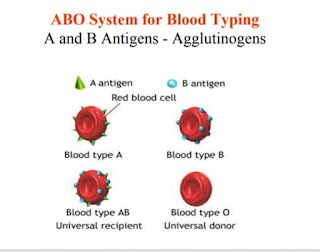
Contents [ hide ]  Objective 1. Describe the basis of blood typing. 2. Know about ABO and Rh system of blood typing and their clinical Significance. 3. Describe incompatibilities ABO and Rh Systems. 4. Know the different types of blood transfusions and their complications ( transfusions reaction ). 5. Describe the basis of the blood typing and crossmatching tests for a safe blood transfusion. Basis of Blood grouping or Typing (Multiplicity of Antigens in the blood cells) At least 30 commonly occurring antigens have been found on the cell membrane of RBCs. These can cause Ag-Ab (antibody) reaction if mixed with plasma that contain Ab against these Ag. According to presence or absence of these antigens blood is classified into several groups or types. Two groups of Ag can cause transfusion reactions more than others: ABO and Rh systems of Ag. ABO System for Blood Typing A and B Antigens Agglutinogens ABO blood types Relative frequency of different blood types: O.    4...

What is the RBC Test?

Image
 This test measures the amount of red blood cells, or erythrocytes, in your blood. Red blood cells play a vital role in transporting oxygen from your lungs to your entire body and returning carbon dioxide to your lungs for excretion. Red blood cell count (RBC) counts are usually performed as part of a complete blood count. This is a diagnostic test for various health conditions. Why You Need Blood RBC Test Done by Specialist? The RBC figure is almost always part of the complete blood count (CBC) test. Tests can help diagnose different types of anemia (low number of RBCs) and other conditions affecting red blood cells. Other situations that may require RBC counts are: Diseases that damage the blood vessels of the kidneys (Alport syndrome) Cancer of white blood cells (Waldenstrom macroglobulinemia) Disorders when red blood cells drop faster than normal (paroxysmal nocturnal hemoglobinuria) Bone marrow disorders in which the bone marrow is restored to red tissue (myelofibrosis) Normal...

A Guide to Healthy Blood Pressure Levels for Your Heart

Image
Contents [ hide ]  How to Get Lower Blood Pressure Naturally? High blood pressure is a dangerous condition that can damage your heart. It affects one third of the population in the US and 1 billion people worldwide (Reliable Source 1,2). Left unmanaged, high blood pressure raises the risk of heart disease and stroke. But there is good news. There are many things you can do to lower your blood pressure naturally, even without medication. Here are 5 natural ways to fight high blood pressure. 1. Go and exercise regularly Exercise is one of the best things you can do to reduce high blood pressure. Regular physical activity helps to strengthen your heart and to pump blood, which in turn lowers your arteries. In fact, moderate exercise for 150 minutes, such as walking, or vigorous exercise for 75 minutes, such as running, weekly, can help lower blood pressure and improve your heart health (Reliable Source, 4 source). In addition, doing more exercise lowers your blood pressure even ...

Dealing With High Blood Pressure: Causes, Symptoms, and Treatment Options

Image
Contents [ hide ]  An Overview of High Blood Pressure& Its Risk Factors HBP risk factors at a glance: There are many factors and variations that can put you at greater risk for developing high blood pressure (HBP or hypertension). Understanding these dangers can help you to determine how high your blood pressure can be. Risk factors related to identity Common genetic and physiological symptoms of hypertension include: Family history If your parents or other close relatives have high blood pressure, you are more likely to get it yourself. Age The older you are, the more likely you are to get high blood pressure. As we grow older, our blood vessels gradually lose their elasticity, which can contribute to elevated blood pressure. However, children can also develop high blood pressure. Learn more about children with high blood pressure. Gender Up to 64 years of age, men are more likely to have high blood pressure than women. 65 years and older, women are more likely to hav...

Understanding High Blood Pressure& How to Manage it

Image
Contents [ hide ] Introduction - Causes of High Blood Pressure: The Problem and What You Should Know What is Blood pressure? Blood pressure is a blood pressure that presses against the walls of your blood vessels. Blood vessels carry blood from your heart to other parts of your body. Your blood pressure often rises and falls throughout the day. What do blood pressure numbers mean? Blood pressure is measured using two numbers: The first number, called systolic blood pressure, measures the pressure in your arteries when your heart beats. The second number, called diastolic blood pressure, measures the pressure in your arteries when your heart is asleep in the middle of a heartbeat. If the ratio reads 120 systolic and 80 diastolic, you can say, “120 over 80,” or write, “120/80 mmHg.” Normal level of blood pressure Normal blood pressure is below 120/80 mmHg¹.  No matter how old you are, you can take steps each day to keep your blood pressure in check. What is high blood pressure ...

Giving Blood: How to Prepare, What Happens, and Afterward

Image
Contents [ hide ]  What Happens During a Typical Blood Donation? Your blood flow with many steps and tests ensures that our blood supply is as safe as possible and helps as many people as possible. Step one The Donation You get to the point where you are nominated for a blood donation. Health history with a slim body is complete. With a complete blood donation, about a liter of blood is collected; Several small blood test tubes are also collected for testing. Your donation, test tubes and donor record are marked with the same bar code label. Your donation is stored on ice before being taken to a Red Cross facility for processing; test tubes go to the laboratory. Step two The Donation Most blood donations are twisted centrifuge to separate components that can be dispensed: red cells, platelets, and plasma. Plasma can be processed into components such as cryoprecipitate, which helps control the risk of bleeding by helping the blood to coagulate. Red cells and platelets are redu...

7 Tips for a Successful Blood Donation Experience

Image
Contents [ hide ]  1. Before the Donation: Get Ready! Blood donation is a relatively safe way to help people with serious medical conditions. Donating blood can lead to other side effects, however, such as fatigue or anemia. Eating and drinking in moderation before and after giving can help reduce the risk of side effects. Read on to learn what to eat and drink before donating blood, as well as tips on learning what to do after donating. What to eat and drink If you are donating blood, it is important that you stay hydrated before and after donating. That is because about half of your blood is made up of water. It is also a good idea to increase your access to the metal because you lose the metal when you donate. Low iron levels can cause symptoms of fatigue. Iron Iron is an important mineral that your body uses to make hemoglobin. Hemoglobin is responsible for transporting oxygen from your lungs to your entire body. Eating nutritious foods that are high in iron can help you ...