Posts

Bachelor in Medical Laboratory Technology (BMLT) Course Details 2021

Image
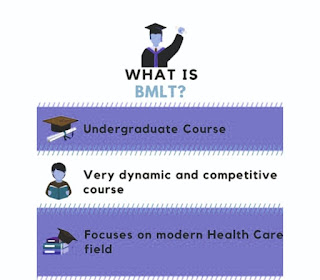
  The Bachelor of Medical Laboratory Technology (BMLT) program is one of the most advanced and advanced programs in modern health care work. The BMLT program lasts for three years and is divided into six semesters. With the growth of medical knowledge, doctors need the help of a medical laboratory to treat rapidly growing diseases, and graduates of the BMLT program have the opportunity to fill these vacancies. With the advancement of medicine and the increase in the number of labs and lab technologies worldwide, the BMLT study has emerged as a new age study. The BMLT course teaches students about the importance of laboratories in the modern environment, as well as laboratory guidelines and procedures to be used in labs. Graduates in BMLT programs have a wide range of career options, especially in the research and pharmaceutical industries. Many organizations invest heavily in research, which provides opportunities for BMLT graduates to find employment. BMLT Course Fee in India: The...

Microbiology Questions

Image
 Very short answer the questions 1. Enumerate the infection produced by staphylococcus. Ans :-  2. Name 4 gram Negative Bacilli. Ans :-  3. Name 2 coagulase positive staphylococcus. Ans :-  4. Name two selective media for corynebacterium diphtheria. Ans:-  5. Name four biochemical test for differece or Escherichiacoli and klebsiekkasp  Ans :- 6. Enumerate Neisseriasp  Ans :-  7. Name four anaerobic bacteria Ans :- 8. Enumerate the different types of candida sp Ans :-  9. Name biochemical test for identification of psedomonas aoruginosa. Ans :- 

Staphylococci Clinical significance structure and classification BMLT Microbiology

Image
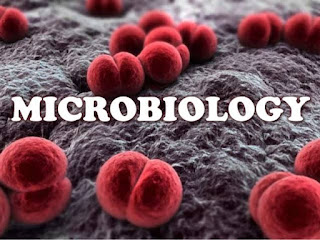
 Staphylococci BMLT Microbiology Clinical significance Of Staphylococci BMLT Staphylococci can cause many types of infections. (1) S aureus causes skin lesions (abscesses, styes) and local abscesses on some sites. (2) S aureus causes serious infections, such as osteomyelitis and endocarditis and more serious skin diseases (furunculosis). (3) S aureus is a major cause of hospital-acquired (nosocomial) infections of surgical wounds and, through S epidermidis, causes infections associated with internal medical equipment. (4) S aureus causes food poisoning by releasing enterotoxins from food. (5) S aureus causes toxic shock syndrome by releasing superantigens into the bloodstream. (6) S saprophiticus causes urinary tract infections, especially in girls. (7) Other types of staphylococci (S lugdunensis, S haemolyticus, S warrneri, S schleiferi, S intermedius) are rare viruses. Structure of Staphylococci BMLT Staphylococci are Gram-positive cocci 1μm in diameter. Build collections Classif...
What is Carbohydrate and function

Image
 Defination of carbohydrate  Carbohydrate are the compound which gives polyhydramoxy aldehyde and keto group on their hydrolysis.  Function of Carbohydrates- Carbohydrates are the main source of energy in the body brain cells and RBC are most depends on carbohydrates as the source of energy. Carbohydrates provides 4Kcal/g Starch in plant and glycogen in animal liver and skeleton muscle are the storage from of the Carbohydrate. Excess carbohydrate is converted to fat . - Glycoproteins like cellulose in plant in mirco organism cell wall and exoskeleton of insects is the measure structural component. Mucopolysaccharides are the ground substance of the connective tissue in higher organism. - Glycoproteins  are Glycolipids are the main components of the cell membrane structure.   Classification of Carbohydrates 

BMLT Full Form

Image
BMLT Full Form : Friends, after 12th, the dream of many students is to become a medical lab technician by doing BMLT course. In such a situation, the question comes here that what is the full form of BMLT. Must have qualification for this course. How to get admission in this course. What is its fee? I will give this information along with the full form. BMLT Full Form  The full form of BMLT is Bachelor in Medical Laboratory Technology.  This is a paramedical course in medical science. Some people also call it a medical course. But in reality it is not a medical course but a paramedical course. It is definitely a matter of course that this is a course related to medicine. Because of this people also call it medical course.  The duration of BMLT course is 3 years. In some universities, this course is conducted year-wise and in some universities, it is conducted on a semester-wise basis. There are total 6 semesters in this. This is an undergraduate paramedical c...

Introduction of Enzyme , enzyme as catalysts, Functional enzymes and non-functional Enzyme

Image
INTRODUCTION OF ENZYME Enzymes are synthesized by the cells of all living organisms. They act like catalysts and accelerate the multitude of metabolic reactions upon which life depends. Without exception, all enzymes are proteins and their catalytic activity depends on the presence of a precise conformational structure in the folded polypeptide chains. Even minor alterations in this structure may result in the loss of activity. Enzymes act on specific substrates. Substrate is a substance on which an enzyme acts and a specific end product/s is/are produced. For example, when amylase (enzyme) acts on starch (substrate) the end products produced are maltose and dextrins. Without enzymes life would not be possible. As the biocatalysts, enzymes occupy central role in health and disease. In health, all physiologic processes occur in an ordered, regulated manner mainly due to the catalytic functions of enzymes, which coordinate numerous metabolic reactions inside the cells. Enzymes play very ...

Carbohydrates definition and important functions Digestion of Carbohydrates

Image
Contents [ hide ] CARBOHYDRATES DEFINITION Carbohydrates are defined as the aldehydic or ketonic derivatives of higher polyhydroxy alcohol or anhydrides of such derivatives. IMPORTANT FUNCTIONS Humans and all animals except carnivorous derive the major portion of their food calories from the various types of carbohydrates in their diets. Most of the energy for the metabolic activities of the cell in all organisms is derived from the oxidation of carbohydrates (in the form of glucose). In the storage organs of plants (in the form of starch) and in the liver and muscles of animals (in the form of glycogen), they are important food reserve. They also serve as an important component of skeletal structures in plants (in the form of cellulose) and that of outer structure of microorganisms. Classification of Carbohydrates Monosaccharides These consist of single polyhydroxy aldehyde or ketone unit which cannot be broken down to simpler substances on hydrolysis. Monosaccharides containing...